A shared workspace to plan, document, and ship your data tracking plans.
Product, engineering, marketing, and analytics teams use DataPlan to define properties and events, document status, collaborate on changes, and keep a lasting reference for analytics and product decisions after implementation.
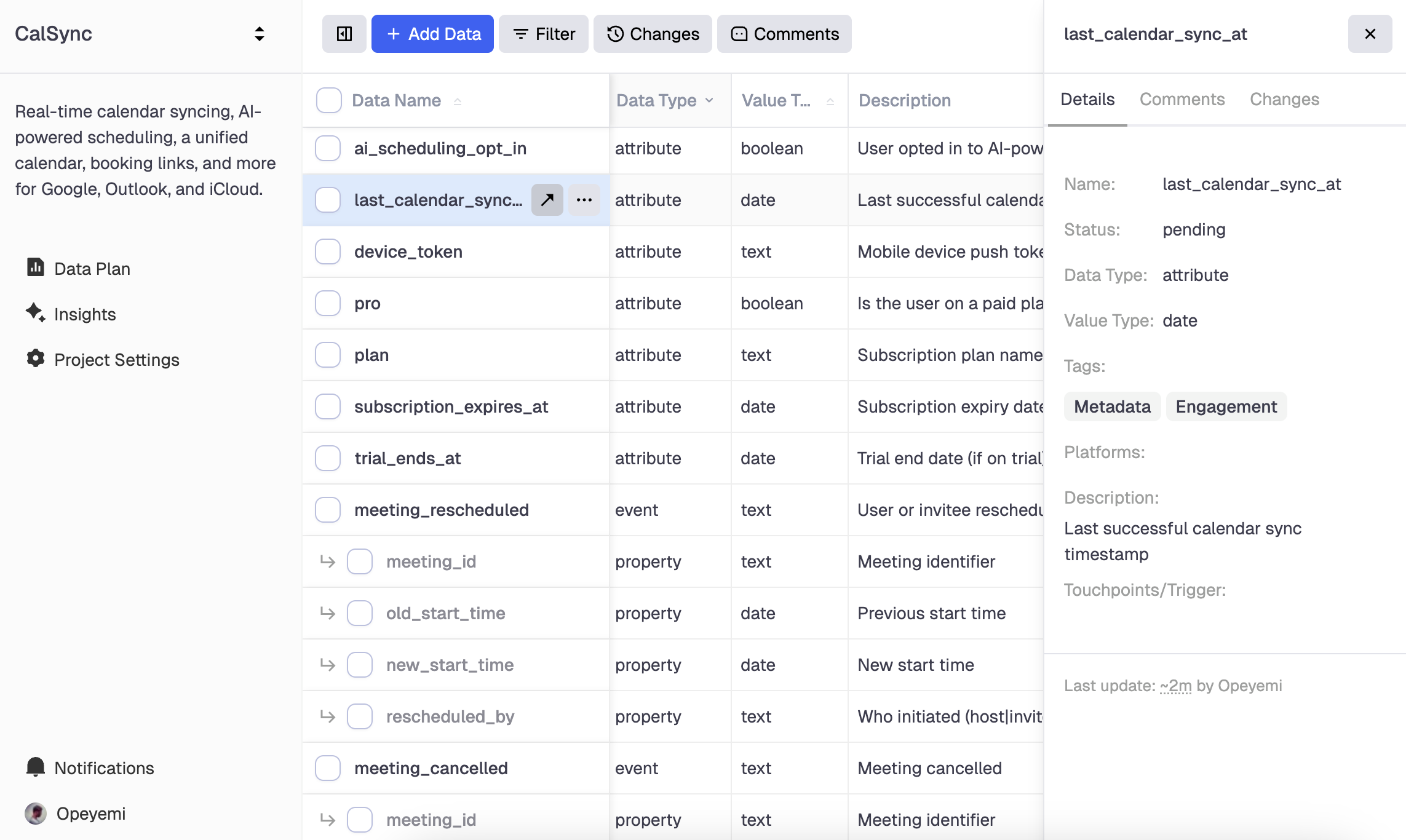
A collaborative tracking workspace.
Define what to track, how to track it, and why it matters. Refine the plan with shared ownership and version history. Then implement from one source of truth instead of reconciling multiple documents.
Data Autogeneration
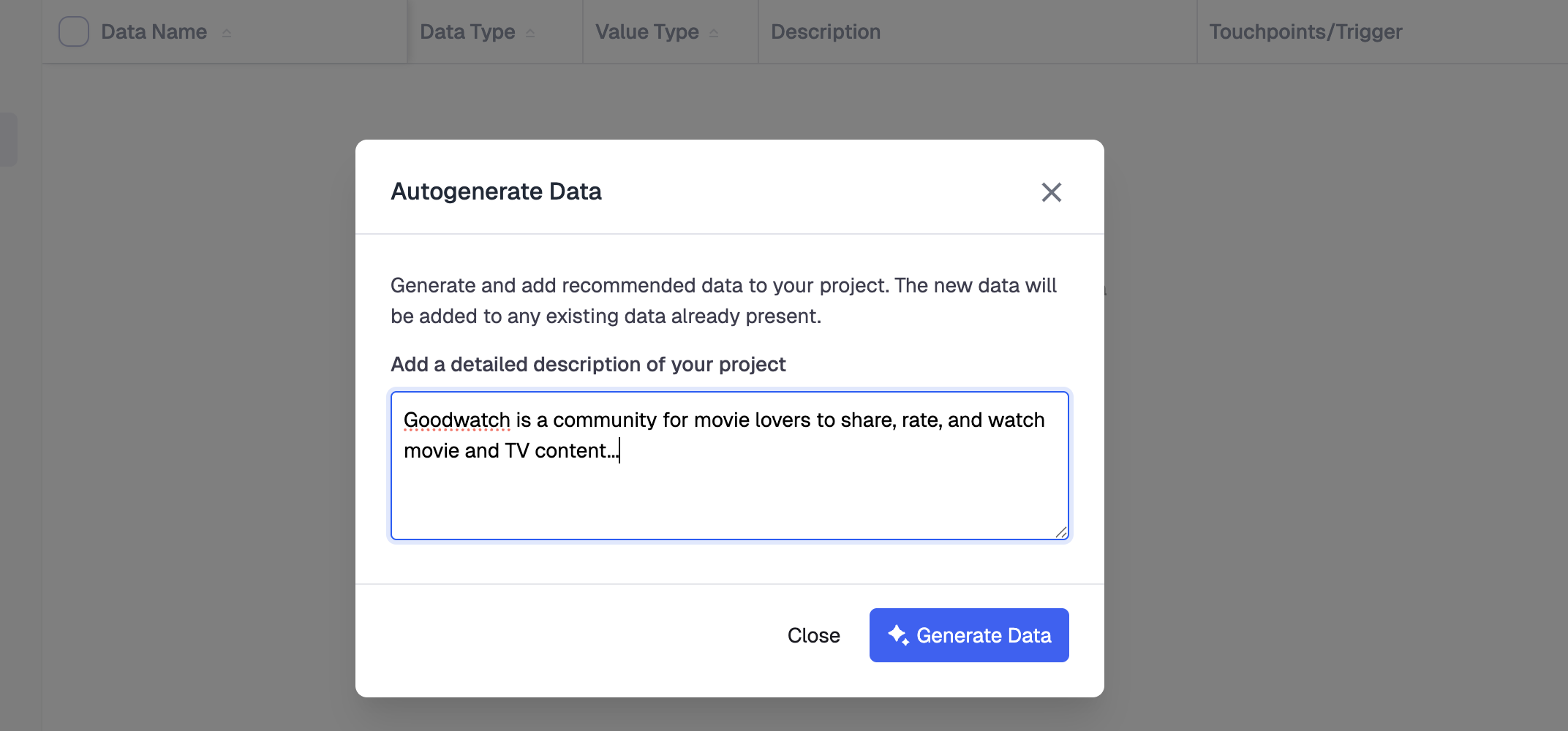
Don't have an idea of data to track? Autogenerate a data plan based on your product description.
Team Collaboration
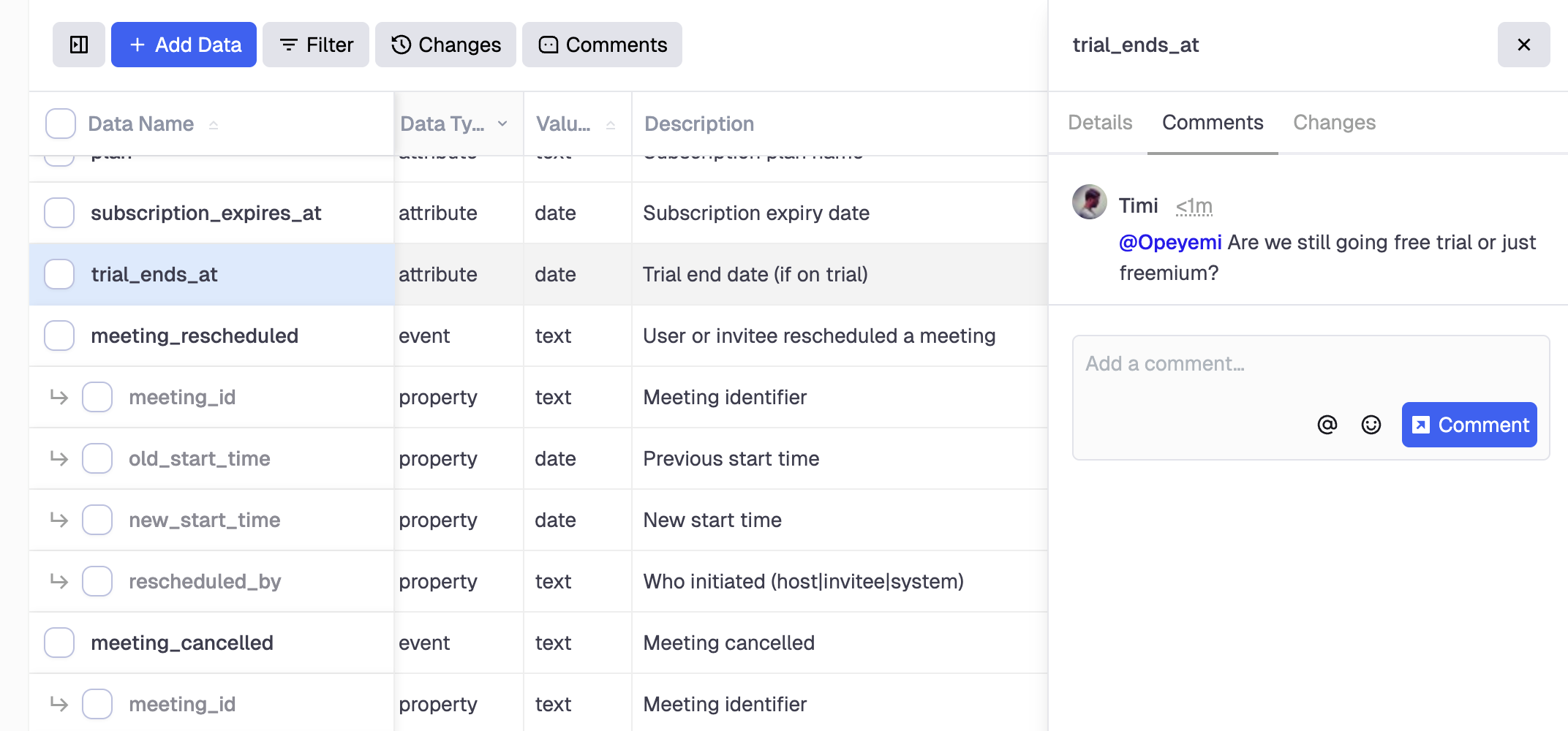
Add team members and collaborate on your data plan together. Assign tags, track status, and collaborate with comments and mentions.
Change History
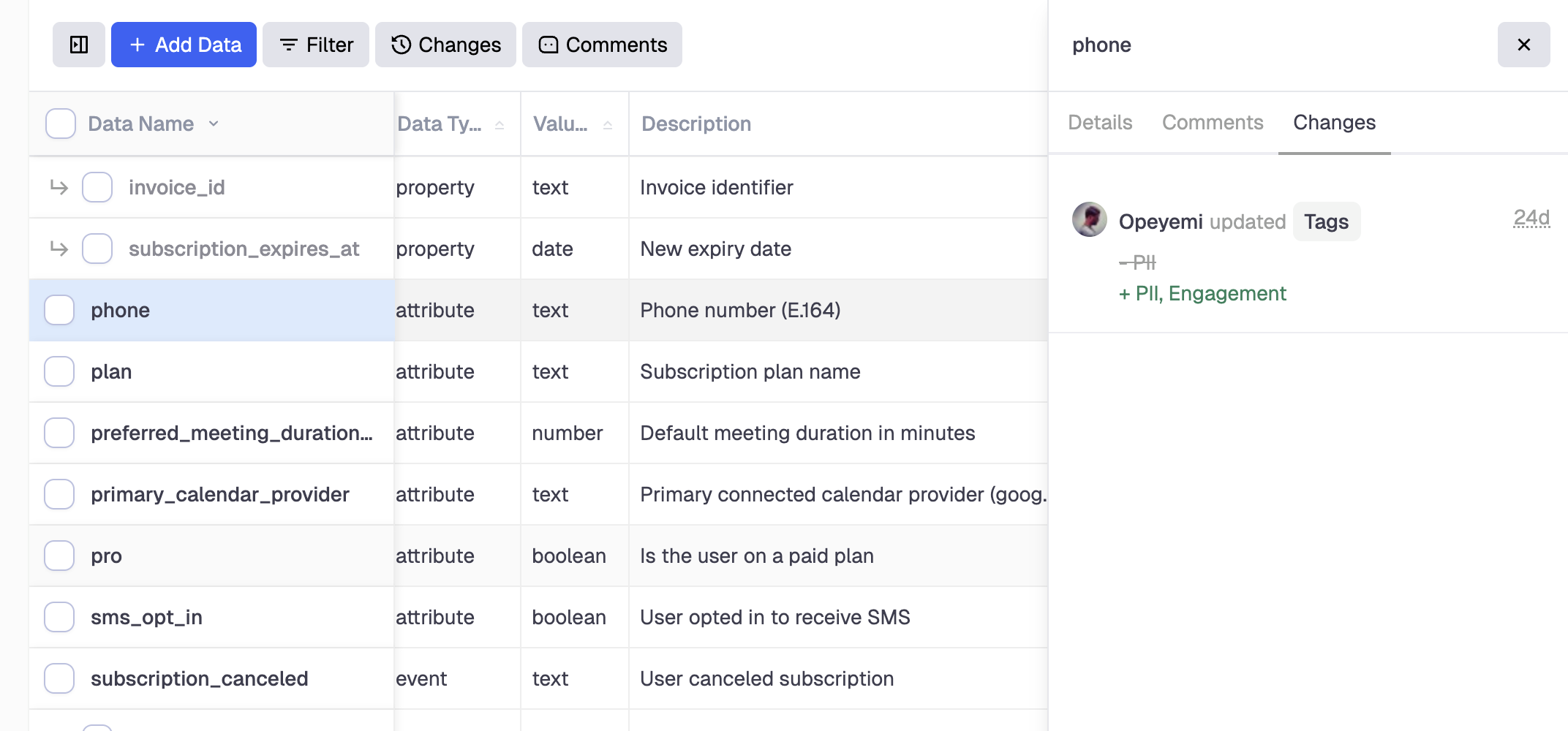
Make changes knowing that you can always refer to previous versions and understand the evolution of your tracking strategy.
Actionable intelligence from your tracking plan.
Get insights with AI-driven recommendations generated from your tracking plan, helping teams assess value, health, trust, segmentation, funnels, and automations.
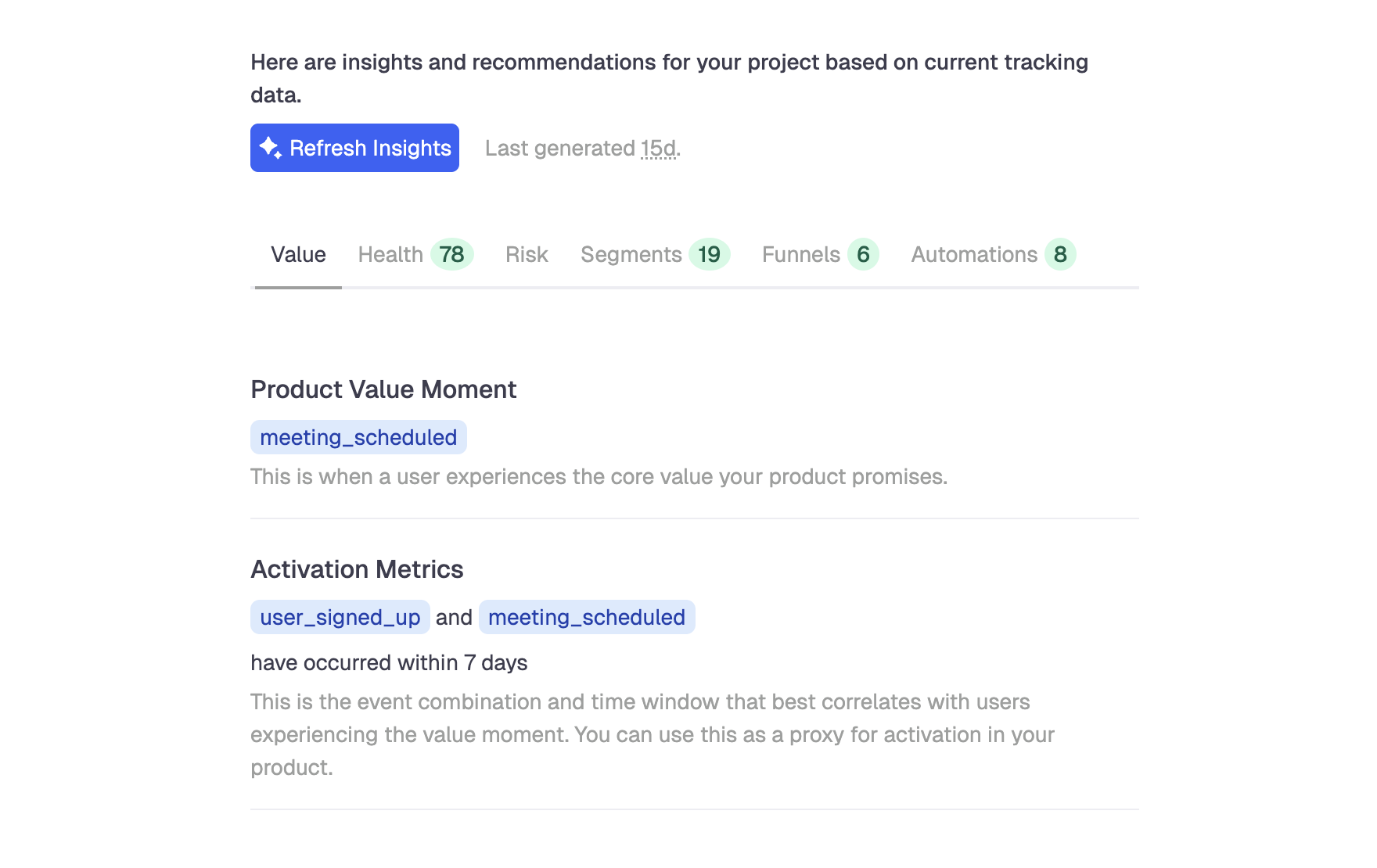
Data Value
Product Value Moment and Activation Metrics are automatically captured and analyzed based on your tracking data.
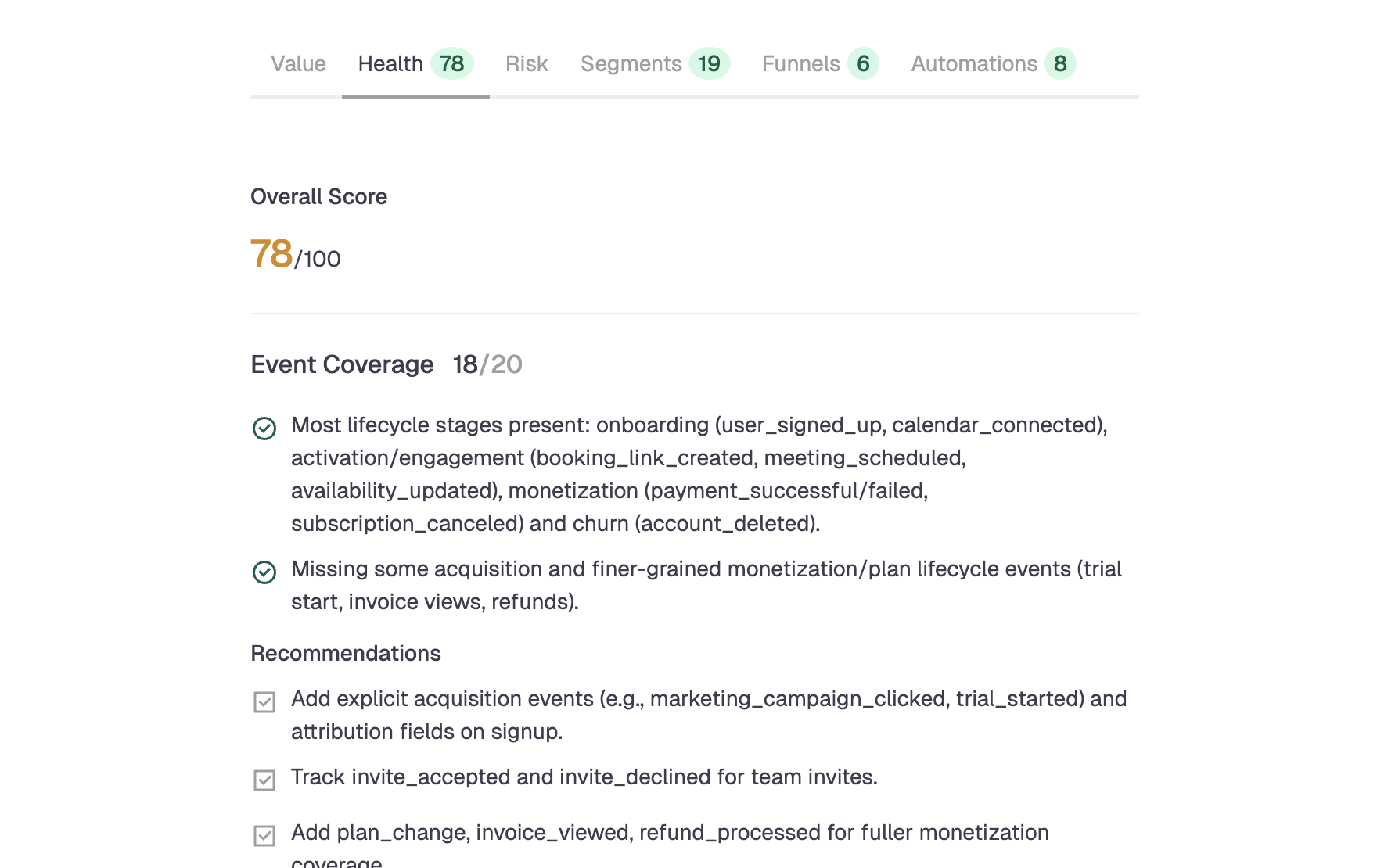
Health Score
Get recommendations for event coverage, naming quality, schema, quality risks, data readiness and more.
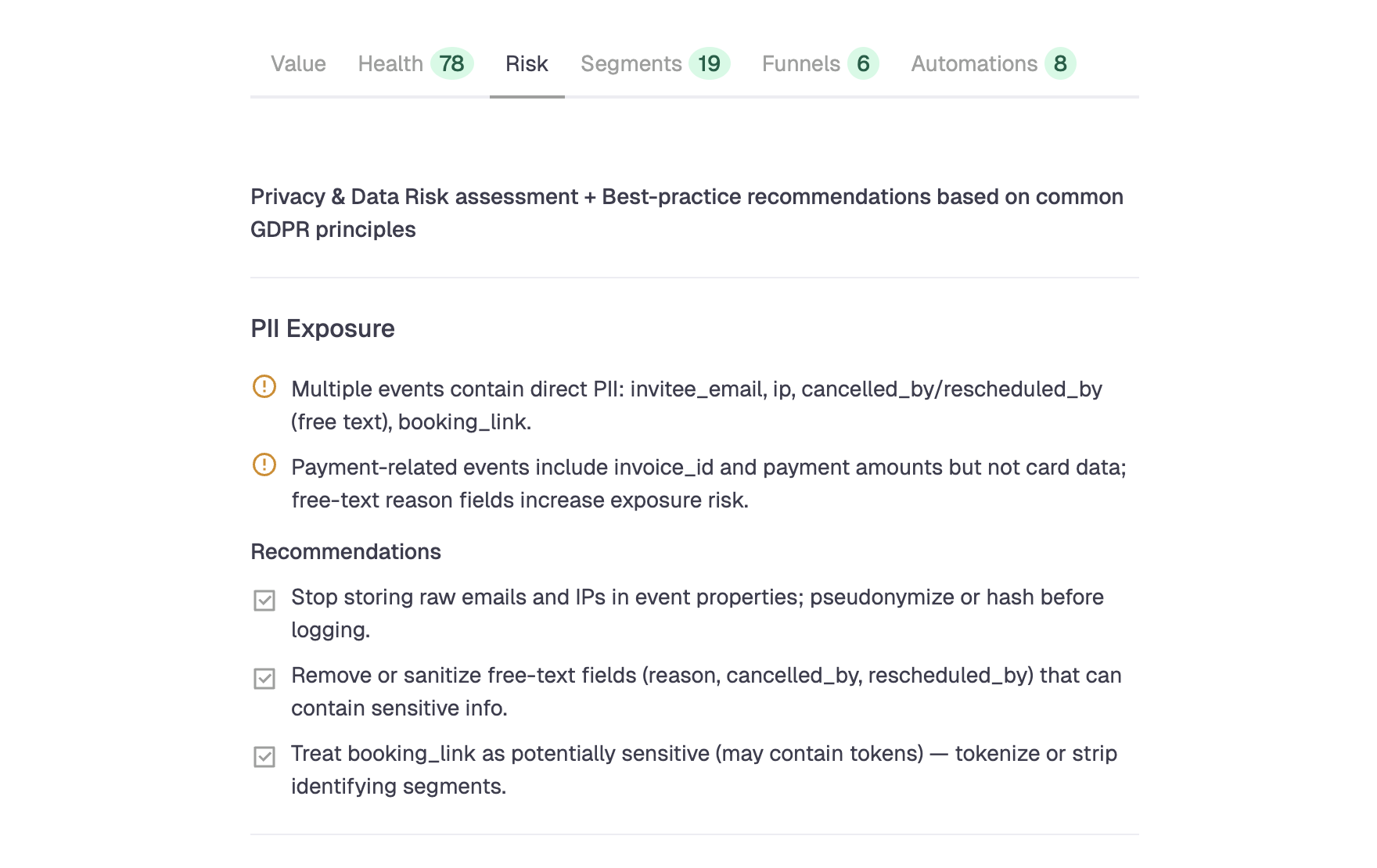
Governance and Compliance
Get Privacy & Data Risk assessment with Best-practice recommendations based on data governance principles.
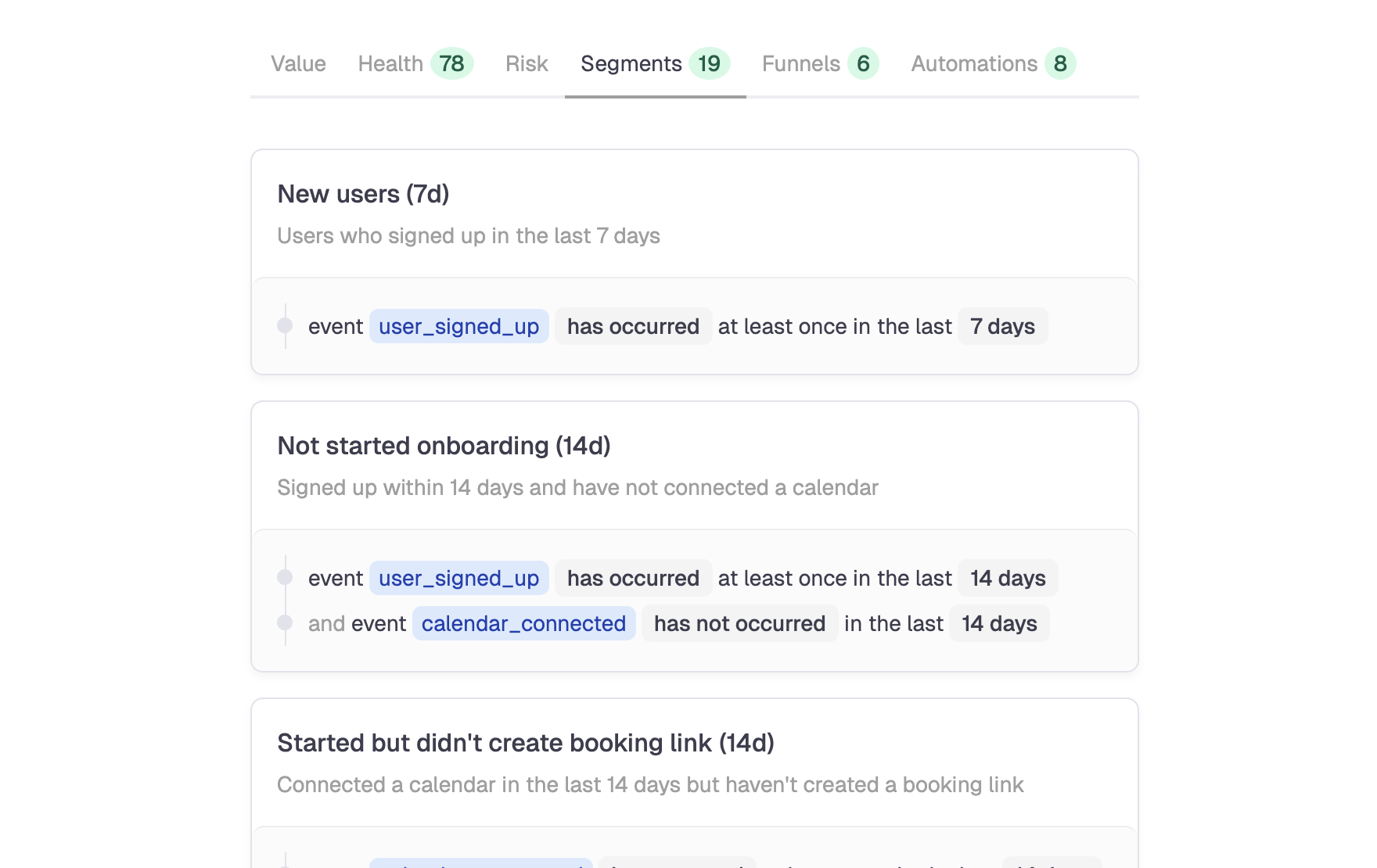
Segmentation
See how to Segment your audience effectively for personalization, targeting, and engagement.
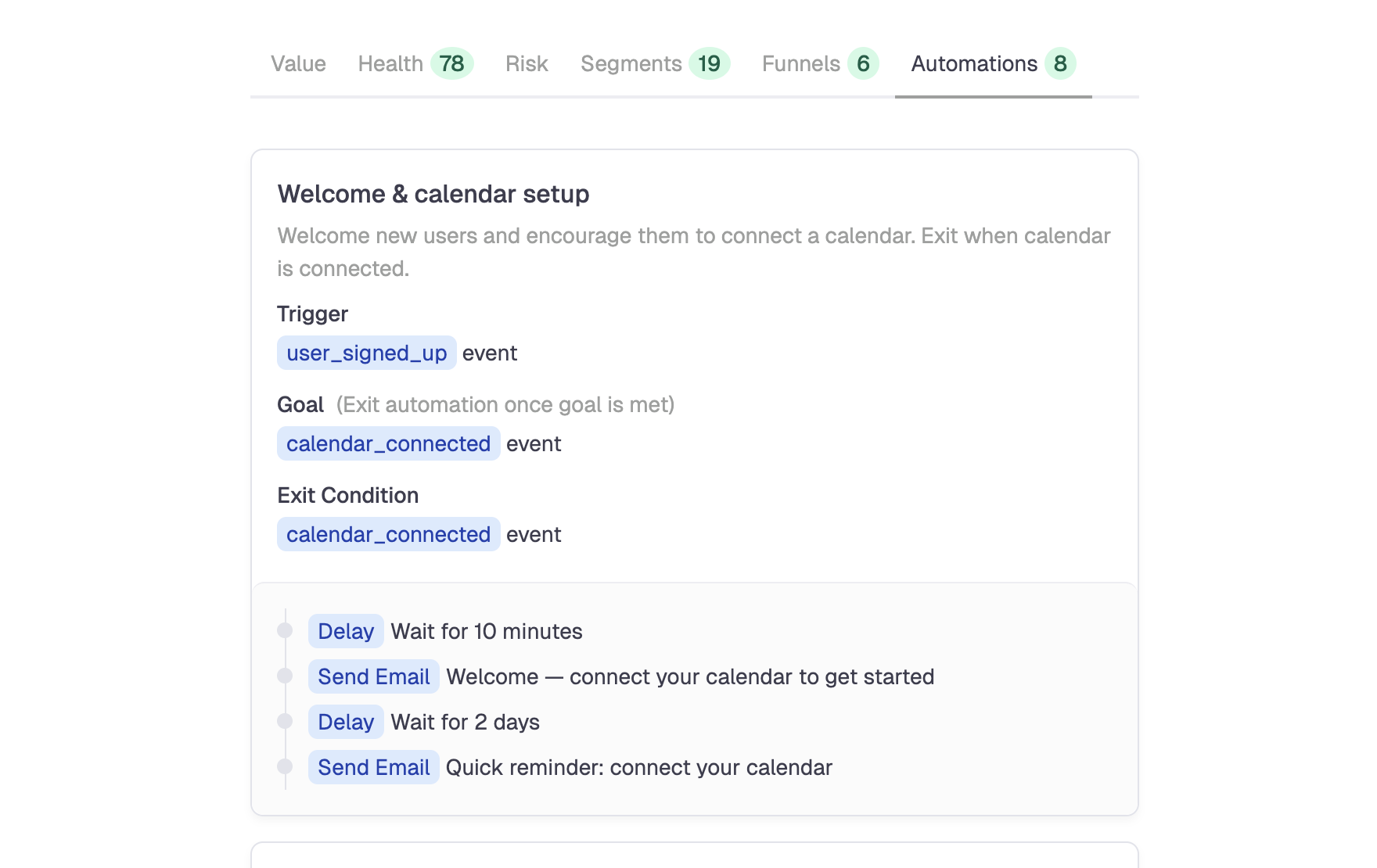
Automations
Get recommendations for automations to set up for lifecycle customer engagement for growth and retention.
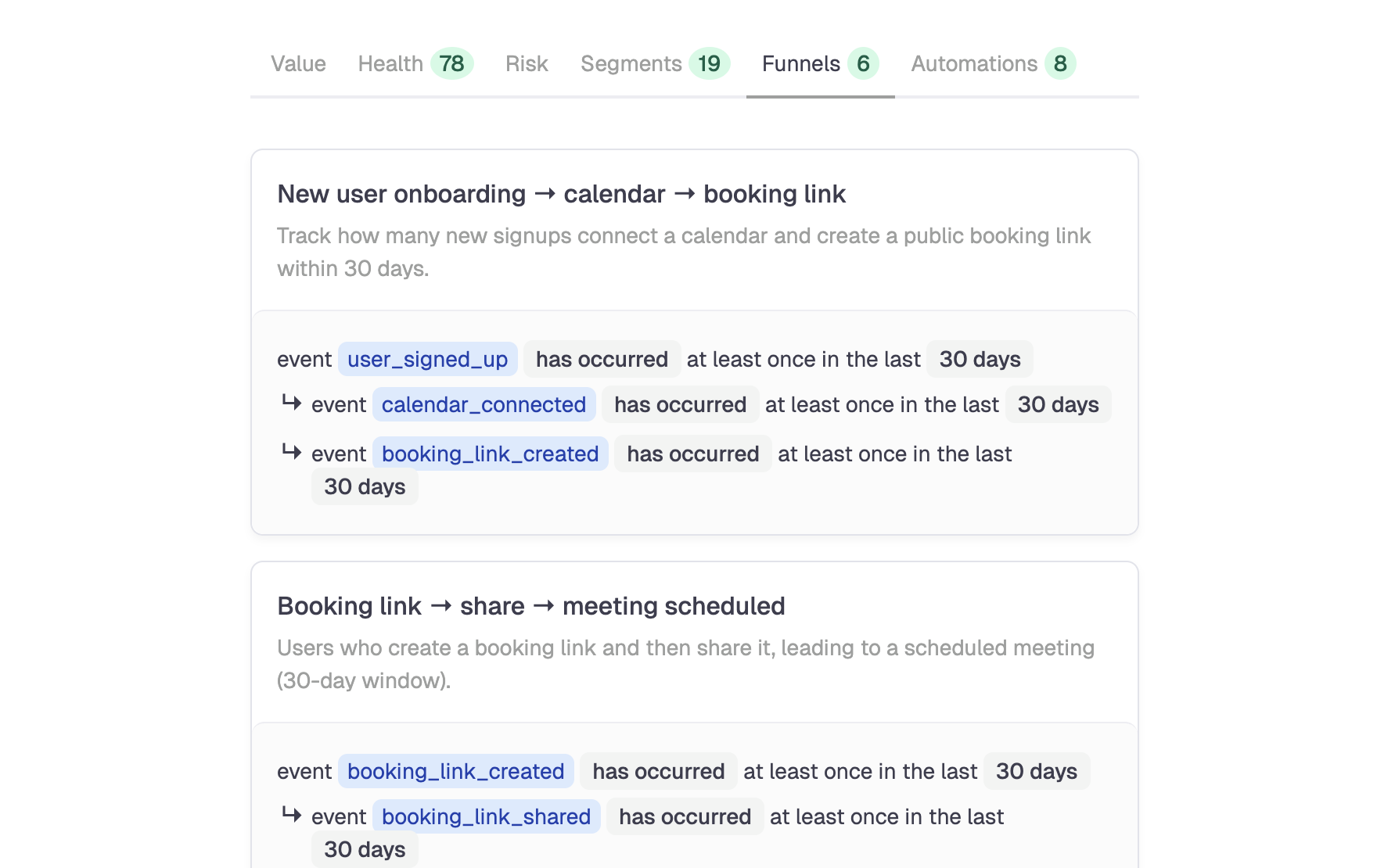
Funnels
Get funnel analysis recommendations to optimize your conversion paths and improve customer journeys.
Why teams choose DataPlan over Google Docs or Notion for tracking plans
Docs tools are great for general writing. DataPlan is purpose-built for tracking strategy that stays useful long after implementation starts.
| Capability | DataPlan | Google Docs / Notion |
|---|---|---|
| Structured tracking fields | Purpose-built fields for name, data type, value type, touchpoint, platform, tags, and status. | Usually freeform tables and text blocks that depend on manual consistency. |
| Ongoing source of truth | Designed to be updated before, during, and after implementation as strategy evolves. | Often becomes static documentation once implementation is complete. |
| Collaboration tied to data items | Comments, mentions, and status changes are directly connected to tracking entries. | Discussion context can be spread across separate pages and comment threads. |
| Decision-oriented insights | Insights and recommendations are generated from the tracking plan itself. | Requires manual interpretation and additional tooling to derive recommendations. |
One plan for everyone.
Product teams define intent, engineering teams implement from explicit specs, and analytics teams trust the resulting data model.
For Product
Write unambiguous event requirements with ownership and success criteria.
For Engineering
Implement from one agreed specification instead of reconciling multiple documents.
For Analytics
Understand event meaning, status, and KPI mapping long after implementation ships.
For Marketing
Leverage data insights to drive campaigns and measure impact effectively.
What are we tracking, who owns it, what status is it in, and how does it map to business outcomes?